 PeacockMedia
MIDISID
Use the sound of a legendary 8-bit chip in your music
Screenshots


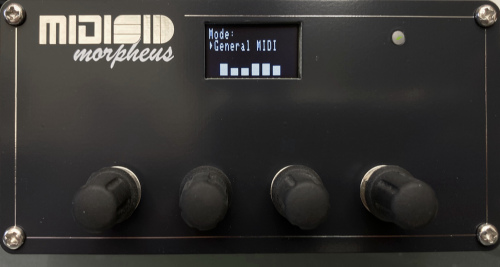
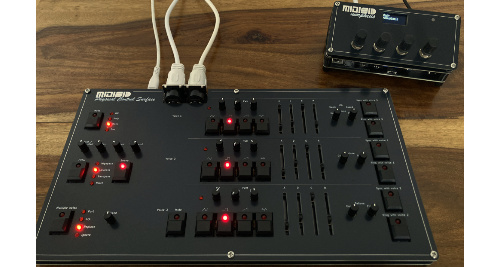
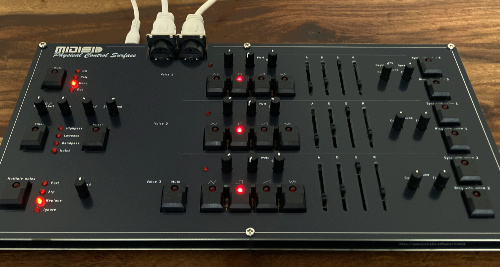
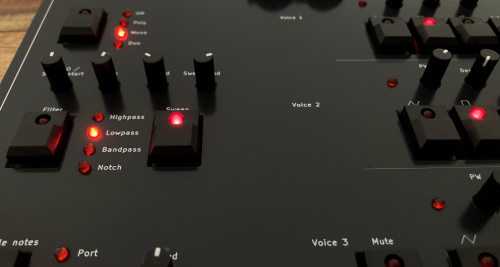


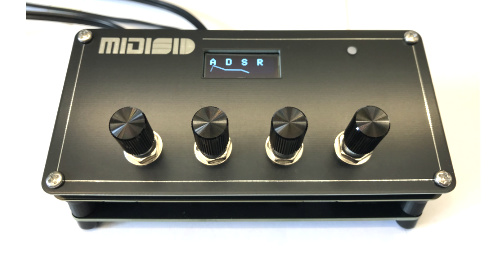


The SID ("Sound Interface Device") was designed for the 1982 Commodore 64 home computer. The designers went way further than they needed to for a home computer of the era and built a 'synthesizer on a chip' with three voices, each with a choice of four waveforms, ADSR, a filter and even ring modulation and waveform sync.
It has a very distinctive sound that is still loved and used today.
MIDISID uses two such chips (modern recreations - Kung Fu SIDs) to give six voices altogether, that can be combined in different ways. Four modes allow you to compose music in a DAW or standalone sequencer, play in .mid files or plug in a controller such as a MIDI keyboard. You can choose from preset sounds or dive into the parameters to create your own sounds.
MIDISID is the small unit that contains the two SIDs and receives MIDI to drive them. It has four encoders/buttons. The new MIDISID control surface gives you analogue pots, sliders and buttons that make it fun and easy to design sounds with this versatile sound chip.
Buy one:
A note for US friends: The new import tariff is pre-paid. Your parcel will bear the PDDP logo to indicate that and should be waved through customs without delay or further charge.
A note for EU friends: I've recently lowered the price to below the€150 threshold, which should mean that VAT is paid at checkout and that import duty is kept to a minimum.
Includes:
- Fully built and tested
- Fitted with two Kung Fu SIDs
- Custom firmware, written from scratch for this project.
- A good manual which you can view / download here
Frequently Asked Questions about MIDISID
What is MIDISID?
MIDISID is a MIDI-controlled hardware synthesiser that recreates the distinctive sound of the legendary SID (Sound Interface Device) chip originally designed for the Commodore 64 home computer. It contains two Kung Fu SIDs, providing six voices in a compact standalone unit. You can play directly using a MIDI controller or bring the character of 1980s 8-bit sound into modern music production.
What does MIDISID sound like?
MIDISID produces the distinctive sound associated with the Commodore 64 SID chip. It can create classic 8-bit and chiptune sounds, basses, leads, pads, arpeggios and a wide variety of experimental electronic sounds. Its programmable waveforms, filters, modulation, ring modulation and waveform sync give it considerably more sound-design potential than other sound generators of the era. You can hear examples on my Youtube channel, here's an example.
Is MIDISID a real Commodore 64 SID synthesiser?
MIDISID is based on the original Commodore 64 SID sound architecture but uses a modern microcontroller and two modern SID replacements rather than vintage SID chips. These recreations provide the characteristic SID sound and features in a purpose-built MIDI instrument, without requiring a Commodore 64 computer.
Can MIDISID use real SID chips
Yes, but there are caveats and I don't recommend this route. Appropriate filter caps will need to be fitted according to the type of SID fitted (6581 or 8580) and if 6581 then you'll need to power MIDISID with a 12v supply rather than 9v. I can take no responsibility for your SID chips.
How many voices does MIDISID have?
MIDISID has six sound-generating voices, provided by two SID chips, each with three voices. These can be combined in different ways, allowing anything from six-note polyphonic playing to more complex monophonic sounds.
Can I connect MIDISID to a MIDI keyboard?
Yes. You can connect a MIDI keyboard or other MIDI controller to MIDISID using its standard 5-pin DIN MIDI input (preferred). Certain USB MIDI controllers can also be connected through its USB-C port (a 'device' such as a keyboard, not a 'host' such as a computer). You can then play MIDISID as a standalone hardware synthesiser without needing a computer.
Can I use MIDISID with a DAW such as Ableton Live or Logic Pro?
Yes. MIDISID can be used as an external hardware synthesiser with a digital audio workstation (DAW). You'll need to use a USB-MIDI adaptor to connect the computer to MIDISID's DIN socket. Your DAW sends MIDI notes and control information to MIDISID, while its audio output is connected back to your audio interface for recording. You'll need to set up your track as an External Instrument or External MIDI Instrument depending on the DAW.
Can MIDISID play standard MIDI files?
Yes. MIDISID has a General MIDI mode that allows it to render standard .mid files. You will need to use some kind of .mid player (usually MIDI player software on a computer, played into MIDISID via a USB-MIDI adaptor). Because the two SIDs have six voices altogether, some complex MIDI arrangements may need editing to get the best results. Simpler arrangements and tracks with fewer simultaneous notes work best.
Can I create my own sounds with MIDISID?
Yes. MIDISID gives you user-friendly access to the parameters of the SID chips, including waveform selection, ADSR envelopes, pulse width, pulse width modulation, filters, resonance, vibrato, filter sweeps, ring modulation and waveform sync. You can start with one of the built-in preset instruments and modify it, or create your own sounds from scratch.
Does MIDISID have preset instruments?
Yes. MIDISID includes 128 preset instruments in its General MIDI mode, as well as preset sounds for its other playing modes. You can select a preset as a starting point for sound design and save your own edited sounds in one of 16 memory slots.
What are the different MIDISID operating modes?
MIDISID offers four main operating modes:
- General MIDI: Renders standard MIDI files and responds to MIDI program changes, with each voice mapped to a specific MIDI channel.
- Polyphonic: Allows you to play chords and melodies with up to six-note polyphony.
- Monophonic: Combines all six voices to create richer, more complex sounds, with one note played at a time.
- Duophonic: Combines the three voices of each SID chip to create complex sounds while allowing two notes to be played simultaneously.
Is MIDISID suitable for making chiptune music?
Yes. MIDISID is particularly well suited to chiptune, retro video game music and electronic music inspired by the Commodore 64 era. It produces authentic 8-bit-inspired tones, while MIDI connectivity makes it easy to incorporate those sounds into modern compositions.
Does MIDISID require a computer to work?
No. MIDISID is a standalone hardware synthesiser. You can connect a MIDI keyboard or compatible MIDI controller and play it directly. A computer is useful if you want to sequence MIDI, play MIDI files, record the audio or update the firmware, but it isn't required for standalone playing.
What connections does MIDISID have?
MIDISID has a standard 5-pin DIN MIDI input, a 3.5mm stereo audio output and a USB-C connection. The USB-C connection is used for firmware updates and can also accept compatible USB MIDI controllers. The audio output can be connected to an audio interface, mixer, amplifier or other suitable audio equipment.
Can MIDISID be purely CC-controlled?
Yes, every parameter of the SID has a CC number and program change messages can select presets, including your own saved presets.
Is MIDISID supplied ready to play?
Yes. MIDISID is supplied fully built and tested, with two Kung Fu SID chips fitted . It also comes with a manual to help you get started, connect MIDI equipment and explore its synthesis features.
Where can I buy MIDISID?
MIDISID is available to purchase through Lectronz. The unit is supplied fully assembled and tested, with two Kung Fu SID chips and custom firmware. Visit the MIDISID product page and follow the Buy Now link to see the current price and availability.
Contact form
You may also like:
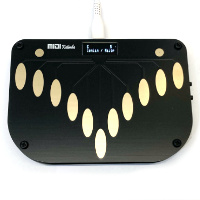
MIDIKalimba
Play like a kalimba, expressive MIDI out
Play like a kalimba with fingers or thumbs onto touch-sensitive pads. Features velocity-sensitivity and built-in looper.
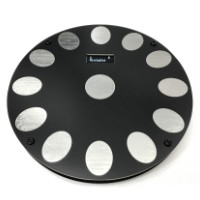
MIDIPan
Play like a tongue drum / hand pan, expressive MIDI out and optional audio
Play like a tongue drum with fingers or thumbs onto touch-sensitive pads. Features velocity-sensitivity and built-in looper.
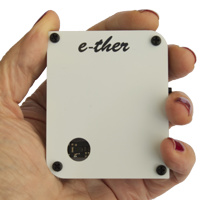
e-ther Classic
Pocket-sized theremin-like instrument with audio and MIDI out
Play this instrument with gestures in the air like a theremin. It can output MIDI over USB, MIDI over TRS, audio at line or headphone level.

Newsletter
MIDI, soundchips, electronics, small-scale instrument-making and music-related retrocomputing.
All the news, views and reviews that I'm aware of in the worlds that I'm excited about. I also include any videos, blog posts etc that I've published.
Free email list.
Human-edited curated content. An AI-free zone.